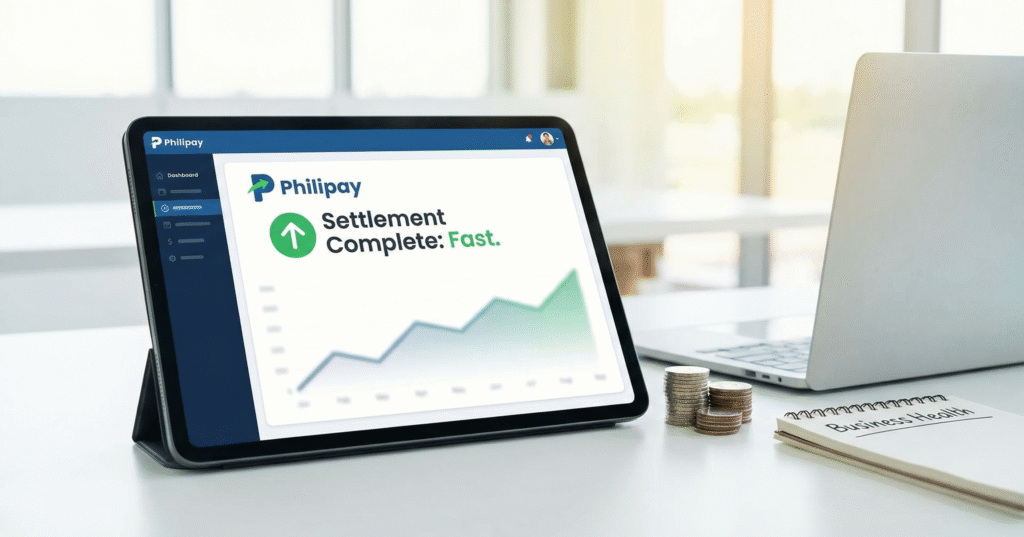
Cash flow is the lifeblood of every business — and yet, for thousands of UK companies operating internationally, fast settlement payments remain out of reach. Delayed cross-border transactions, opaque bank processing windows, and unpredictable settlement timelines quietly drain working capital, stall supplier relationships, and create compounding financial stress. In 2026, this is no longer a necessary cost of doing business globally. The right payment infrastructure can transform how quickly money moves — and how confidently your business grows.
Table of Contents
What Are Fast Settlement Payments and Why Do They Matter?
Fast settlement payments refer to the rapid transfer and clearing of funds between businesses, suppliers, employees, or clients — typically completing within hours rather than the three-to-five business days associated with traditional international banking.
For businesses managing global operations, payment speed is not merely a convenience. It is a direct determinant of operational stability, vendor trust, and financial agility. Every day a payment sits in a clearing queue represents frozen capital — money your business has committed but cannot yet reinvest, account for, or leverage.
According to research published by the Bank for International Settlements (BIS), payment delays in cross-border transactions remain one of the most significant inefficiencies in the global financial system, costing businesses billions in opportunity costs annually.
The shift toward real-time and same-day international payment processing is not just a fintech trend. It is rapidly becoming a baseline business requirement for any company operating across borders in 2026.
The True Cost of Slow Settlements on Business Health
Before exploring solutions, it is important to understand precisely how delayed business payment settlement damages financial health over time.
Slow settlements create a cascade of hidden costs:
- Working capital erosion: Funds in transit cannot be deployed, creating artificial cash shortfalls even when revenue is strong.
- Supplier friction: Late payments — even when caused by banking delays rather than business intent — damage vendor trust and negotiating power.
- Foreign exchange losses: Longer settlement windows increase exposure to adverse currency movements, particularly for GBP-to-PHP transactions.
- Administrative burden: Finance teams spend disproportionate time chasing payment confirmations, reconciling delayed entries, and managing liquidity gaps manually.
- Missed growth opportunities: Capital tied up in settlement cycles cannot be reinvested in inventory, staffing, or expansion.
A report from McKinsey & Company’s Global Payments Report highlights that businesses embracing faster cross-border payment infrastructure see measurable improvements in working capital efficiency and operational competitiveness — particularly in emerging market corridors like the UK-Philippines route.
The message is clear: international payment processing speed is a strategic advantage, not a back-office detail.
7 Ways Fast Settlement Payments Improve Business Cash Flow
1. Eliminate Working Capital Gaps
Fast settlement payments directly address the most common cause of business cash flow problems: the gap between money owed and money received.
When your cross-border payment provider settles transactions within hours rather than days, your working capital remains fluid. You pay suppliers on time, receive incoming funds promptly, and avoid relying on overdraft facilities or short-term credit to bridge unnecessary gaps.
For businesses operating between the UK and the Philippines — managing BPO teams, remote staff, or local suppliers — the ability to execute same-day settlements means payroll runs smoothly, vendor invoices are honoured, and your balance sheet reflects reality rather than a delayed picture distorted by clearing queues.
Key benefit: Your business holds more usable cash, more often, without changing your revenue model.
2. Strengthen Supplier and Partner Relationships
Speed of payment is one of the most powerful — and underutilised — tools for building durable business relationships.
When suppliers and partners receive timely, predictable payments, they extend greater flexibility, prioritise your orders, and offer more favourable terms over time. In the Philippines specifically, where business relationships carry significant cultural weight, reliable and fast international payment processing signals professionalism, stability, and long-term commitment.
Conversely, businesses that rely on traditional bank transfers — with their opaque timelines and frequent delays — inadvertently communicate unreliability, regardless of intent. The payment infrastructure you choose actively shapes how your partners perceive your business.
Key benefit: Faster settlements transform payment reliability from a logistical function into a relationship-building strategy.
3. Reduce Foreign Exchange Exposure
Every day that a cross-border payment spends in transit is a day during which exchange rates can move against you.
For UK businesses paying Filipino employees, suppliers, or service providers in Philippine Peso (PHP), prolonged business payment settlement windows compound FX risk. A rate movement of even 0.5% on a large payroll run can translate to thousands of pounds in unbudgeted costs over the course of a year.
Fast settlement payments minimise this exposure by reducing the time between rate confirmation and fund delivery. With a multi-currency business account that holds balances in GBP, EUR, USD, and PHP simultaneously, businesses can lock in favourable rates and execute conversions precisely when conditions are optimal — not when the banking system permits it.
Key benefit: Reduced currency exposure means more predictable costs and stronger financial planning.
4. Improve Financial Forecasting Accuracy
Accurate financial forecasting is impossible when your cash flow data is perpetually out of date.
Traditional cross-border banking introduces a structural lag between when payments are initiated and when they appear in your accounts. This lag forces finance teams to work from estimates and approximations — increasing the risk of misaligned budgets, inaccurate cash flow projections, and poor capital allocation decisions.
Fast settlement payments create real-time financial visibility. When transactions clear promptly, your accounts reflect actual cash positions, enabling your finance function to make confident decisions about investment, staffing, and operational expenditure.
Key benefit: Same-day settlements give your CFO and finance team the accurate data they need to plan and act with confidence.
5. Scale Mass Payroll Without Bottlenecks
For businesses managing large remote workforces in the Philippines — particularly those in the BPO, technology, and professional services sectors — mass payroll is one of the most operationally critical payment functions.
Traditional international payroll runs are slow, expensive, and administratively intensive. Each payment may require individual processing, incur separate transaction fees, and pass through multiple correspondent banks before reaching the recipient — each one introducing delay and cost.
A platform built for fast settlement payments at scale enables businesses to execute bulk salary payments to hundreds or thousands of employees simultaneously, with consistent settlement timelines and transparent, low fees. This eliminates the operational bottleneck that prevents many businesses from confidently scaling their Philippines-based teams.
Key benefit: Scalable mass payments mean your growth in headcount is never constrained by payment infrastructure.
6. Unlock Better Credit and Borrowing Terms
Cash flow health is the primary metric lenders and credit facilities use to assess business risk. A business that demonstrates consistent, positive cash flow — with minimal periods of frozen capital — is assessed as lower risk and offered more favourable borrowing terms.
Fast settlement payments improve the cash flow metrics that lenders scrutinise most: days payable outstanding (DPO), days sales outstanding (DSO), and the net cash conversion cycle. When your international payments move quickly and predictably, your balance sheet reflects financial discipline and operational efficiency.
This has a compounding benefit: stronger credit terms reduce the cost of capital, which in turn enables more aggressive growth investment. Cash flow optimisation via payment speed is not just operational — it is a strategic lever for long-term financial positioning.
Key benefit: Predictable, fast settlements enhance your financial profile with lenders, investors, and partners.
7. Reinvest Capital Faster for Competitive Growth
Ultimately, the most powerful benefit of fast settlement payments is the speed at which your business can cycle and redeploy capital.
In competitive markets — whether you are scaling a Philippine operations hub, expanding into new international corridors, or managing seasonal demand spikes — the speed at which you can access and redeploy revenue directly determines your competitive agility. Businesses running on slow payment infrastructure are perpetually one step behind, waiting for capital to clear before they can act.
With same-day cross-border settlements, the gap between earning and deploying capital collapses. Your business becomes operationally faster — able to restock, hire, invest, and respond to market opportunities without being held back by the banking system.
Key benefit: Faster capital cycling is a genuine competitive advantage in dynamic, growth-oriented markets.
How Cross-Border Payment Speed Impacts UK-Philippines Operations
The UK-Philippines corridor is one of the most commercially significant cross-border payment routes in South-East Asia. Thousands of UK businesses rely on Philippine-based BPO teams, software developers, virtual assistants, and supply chain partners. The volume and frequency of payments on this route make cross-border payment speed especially consequential.
Yet traditional banking on this corridor remains notoriously slow. Payments routed through SWIFT correspondent networks can take three to five business days, involve multiple intermediary fees, and arrive with unpredictable deductions — leaving recipients with less than expected and finance teams with reconciliation headaches.
The operational impact for UK-Philippines businesses is significant:
- Payroll runs become logistically complex, requiring payment initiation days in advance to ensure on-time delivery.
- Supplier invoice terms must be padded to accommodate banking delays, increasing cost of procurement.
- End-of-month financial reporting is distorted by in-transit payments that have left the UK account but not yet arrived in the Philippines.
- Employee satisfaction suffers when salary payments arrive late, leading to higher attrition in remote teams.
Fast international payment processing on the UK-Philippines route is not a luxury — it is an operational necessity for businesses serious about building reliable, scalable Philippines-based operations.
Explore how PhiliPay’s platform supports UK-Philippines payment operations →
What to Look for in a Fast Settlement Payment Provider
Not all payment providers deliver equally on speed, transparency, or commercial value. When evaluating a fast settlement payments partner for your international business needs, prioritise the following criteria:
Settlement Speed and Transparency
- Can the provider demonstrate consistent same-day or next-day settlement timelines on your specific payment corridors?
- Are settlement timelines clearly stated upfront — not buried in terms and conditions?
- Is there real-time tracking and confirmation of payment status?
Multi-Currency Account Functionality
- Can you hold balances in multiple currencies (GBP, EUR, USD, PHP) without mandatory conversion?
- Does the platform allow you to choose when to convert, enabling strategic FX management?
- Are named accounts available so clients pay you locally, in their own currency?
Mass Payment Capability
- Can the platform handle bulk salary or vendor payments to multiple recipients simultaneously?
- Are fees transparent and consistent at scale — or do costs escalate unpredictably with volume?
Regulatory Standing and Compliance
- Is the provider regulated by a credible financial authority (such as the UK’s Financial Conduct Authority)?
- Are client funds safeguarded in ring-fenced accounts separate from company operational funds?
- Is the provider transparent about its compliance framework and data protection practices?
Dedicated Support and Partnership
- Does the provider offer access to real people for account management and complex payment queries?
- Is there a bespoke service option for businesses with specialist needs?
Choosing the right partner is not merely a cost decision. It is a strategic decision that will directly affect your cash flow optimisation, your vendor relationships, and your capacity to scale.
Speak with the PhiliPay team about your specific payment needs →
How PhiliPay Delivers Fast Settlement Payments for Global Businesses
PhiliPay was built specifically to solve the payment challenges that UK businesses face when operating internationally — particularly on the UK-Philippines corridor.
Rather than adapting a generic global payments platform, PhiliPay’s infrastructure is purpose-built for cross-border payment speed, transparency, and reliability. Here is how the platform delivers against each of the seven cash flow priorities outlined above:
Rapid Settlement Infrastructure PhiliPay’s payment network bypasses the multi-correspondent SWIFT delays that slow traditional banking. Transactions are processed efficiently, with settlement timelines designed to provide the speed and predictability your finance team requires.
Multi-Currency Business Accounts with Named Accounts Hold GBP, EUR, USD, and CAD balances without automatic conversion. Receive international payments through named accounts that give your business a local presence in your clients’ markets — eliminating friction and reducing the cost of incoming funds.
Competitive Exchange Rates to PHP PhiliPay offers competitive GBP-to-PHP (and other currency) conversion rates, reducing the FX cost that accumulates on high-volume payment corridors. Transparent pricing means no hidden spreads or surprise deductions on arrival.
Mass Payments for BPO and Workforce Management Whether you are paying ten remote employees or ten thousand, PhiliPay’s mass payment capability enables bulk payroll runs with consistent timelines and transparent, low per-transaction fees. Scale your Philippines team with confidence that payroll infrastructure will not become a constraint.
FCA-Authorised via Sciopay Ltd PhiliPay’s payment services are provided by Sciopay Ltd, authorised by the Financial Conduct Authority (FCA) as an Authorised Payment Institution (Firm Reference Number: 927951). Client funds are held in ring-fenced accounts at tier-one banks — fully protected from operational risk.
Dedicated Business Support PhiliPay operates as a genuine partner, not just a platform. Businesses with specialist requirements — from BPO operations to multi-entity treasury management — can access dedicated support tailored to their specific operational context.
The result is a business payment settlement experience that is fast, transparent, secure, and built around the operational realities of global business in 2026.
Frequently Asked Questions
What is the difference between fast settlement payments and standard bank transfers?
Standard international bank transfers typically take three to five business days to clear, passing through multiple correspondent banks before reaching the beneficiary. Fast settlement payments use modern payment rails and purpose-built infrastructure to reduce this timeline to hours or same-day, dramatically improving cash flow for businesses operating internationally.
How does cross-border payment speed affect cash flow optimisation?
Cross-border payment speed directly determines how quickly received revenue becomes usable working capital. Every day a payment spends in transit is a day of frozen capital. Faster settlements compress the cash conversion cycle, allowing businesses to hold more deployable cash and reinvest revenue more rapidly.
Is a multi-currency business account essential for managing international payments?
For any business receiving or making payments in more than one currency, a multi-currency business account is a critical tool. It eliminates mandatory conversion at unfavourable rates, allows strategic timing of FX transactions, and enables businesses to maintain local payment credibility in multiple markets without holding multiple traditional bank accounts.
How does PhiliPay ensure my funds are secure?
PhiliPay’s payment infrastructure is operated by Sciopay Ltd, which is authorised by the Financial Conduct Authority. Client funds are held in ring-fenced accounts at tier-one banks, completely separate from operational company funds. Advanced encryption and strict compliance procedures protect every transaction. For full details, you can review PhiliPay’s Safeguarding Policy and Privacy Policy.
Can PhiliPay handle mass payroll payments to Philippines-based employees?
Yes. PhiliPay’s mass payment capability is specifically designed for businesses managing large Philippine workforces — including BPO operations, technology teams, and distributed service providers. Bulk payroll runs are processed efficiently with transparent fees and consistent settlement timelines.
What currencies does PhiliPay support?
PhiliPay supports over 100 currencies, with core functionality focused on GBP, EUR, USD, CAD, and PHP. Named accounts are available to receive funds locally in key markets, and competitive exchange rates are offered for PHP conversion.
Conclusion: Your Business Health Starts With Payment Speed
The connection between fast settlement payments and business health is not theoretical — it is direct, measurable, and increasingly decisive in competitive international markets.
Every day of payment delay represents frozen working capital, eroded supplier relationships, and compounded FX risk. Conversely, every improvement in settlement speed translates into a more agile, financially healthy, and strategically positioned business. The seven benefits outlined in this article — from eliminating working capital gaps to unlocking better credit terms — are all downstream effects of a single, solvable infrastructure decision: choosing a payment partner built for speed, transparency, and global reach.
For UK businesses operating in the Philippines, or for any company managing international payment flows in 2026, cash flow optimisation starts with payment infrastructure. The technology exists. The regulatory framework is in place. The only remaining question is whether your current provider is delivering the settlement speed your business deserves.
PhiliPay was built to answer that question with a definitive yes.
🚀 Ready to experience fast settlement payments and transform your business cash flow?
Open your PhiliPay Business Account today — it takes minutes to get started.
Join thousands of businesses already moving money faster, smarter, and more transparently across borders.
PhiliPay Ltd is a company registered in the UK (Company No. 16596898). Payment services are provided by Sciopay Ltd, authorised by the Financial Conduct Authority as an Authorised Payment Institution (FRN: 927951). Client funds are safeguarded in ring-fenced accounts at tier-one banks.
Word Count: ~2,850 words